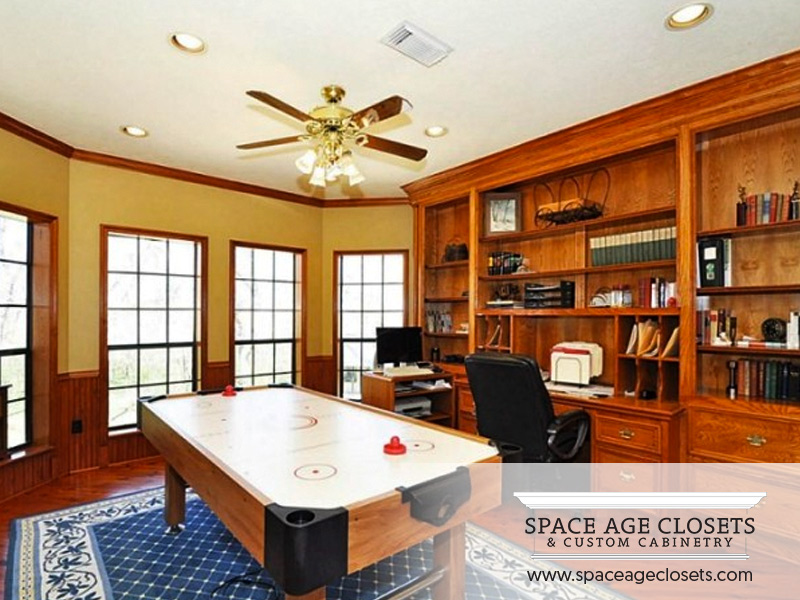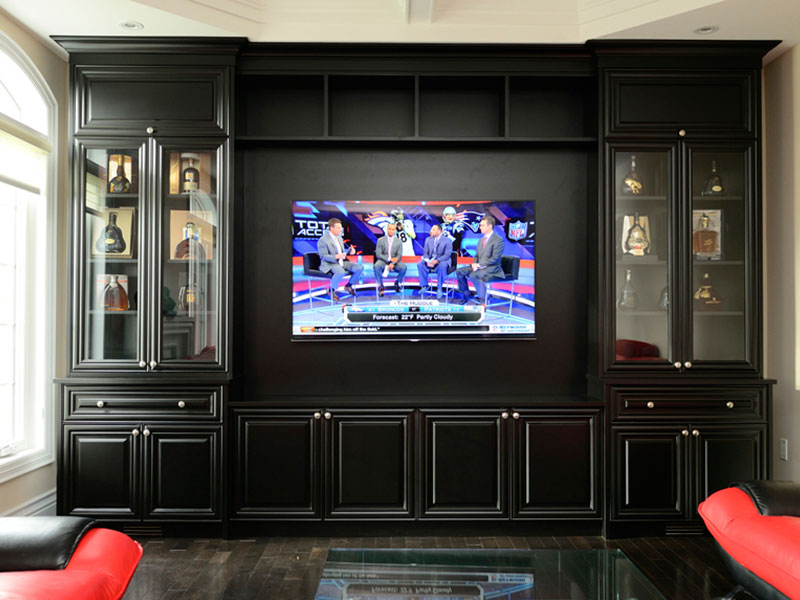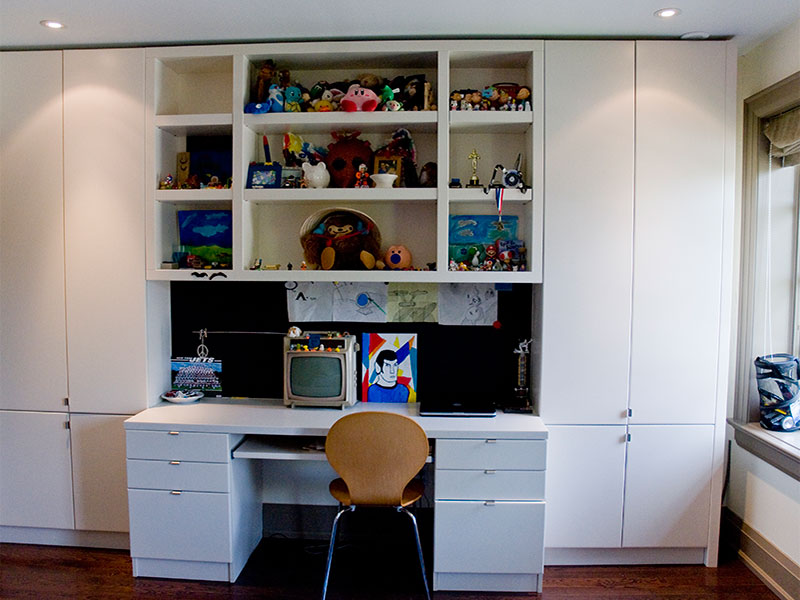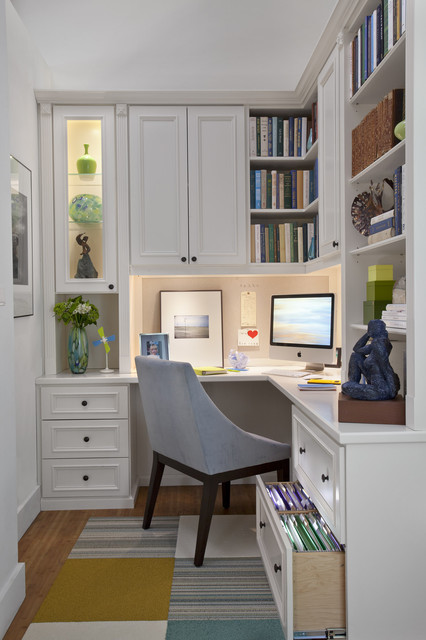
Space Age Closets & Custom Cabinetry builds custom storage cabinets for homes across Toronto and the GTA, and “custom” means the cabinets can be any size you need them to be. That freedom is the whole point, but it can also be overwhelming: bigger than standard, smaller, deeper, taller? After decades of measuring Toronto homes, here’s the method we use to get cabinet sizing right, before any design is drawn.
Start With the Largest Thing You’ll Store
Cabinets need to be functional above all, which means they need to fit what goes in them. You don’t have to measure everything you own, the outliers set the requirements. Make sure at least one section of the design can swallow the biggest items headed its way, and the rest tends to fall into place. What counts as “biggest” changes room by room:
- Garage cabinets: tall and wide outliers like golf clubs and air compressors. Measure them first. They decide the cabinet’s height and depth. (See our custom garage storage in Toronto.)
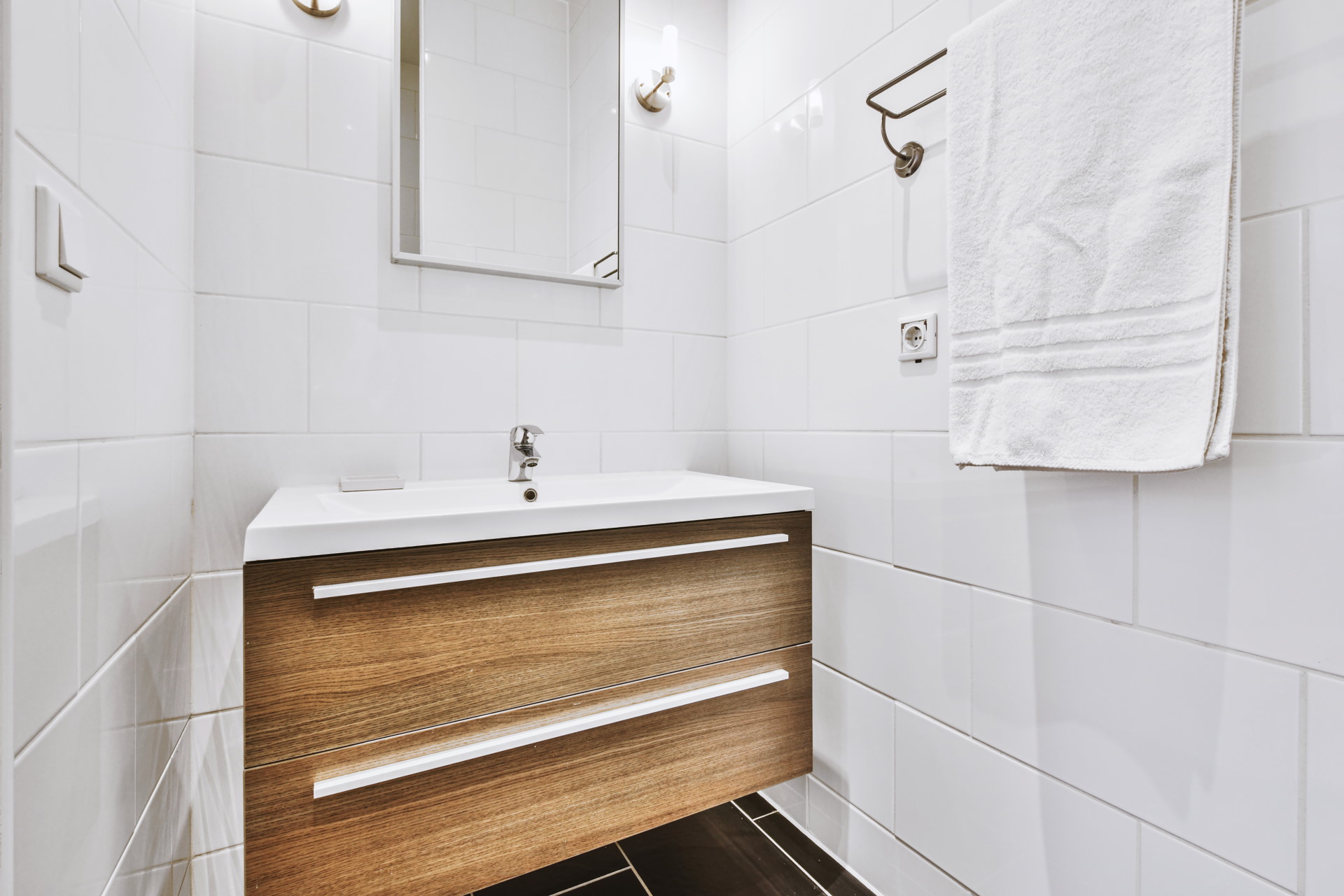
- Bathroom cabinets: less about sheer size, more about privacy. You may want one small section that’s deliberately harder to access.
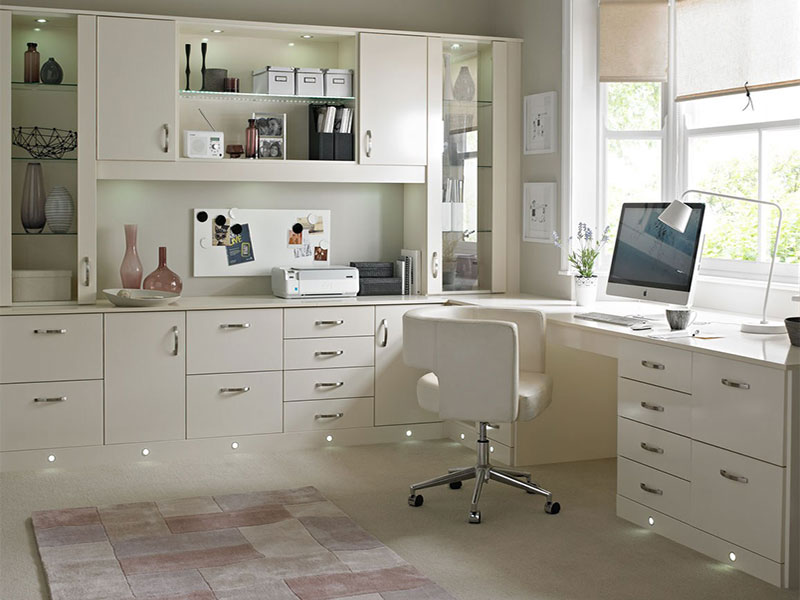
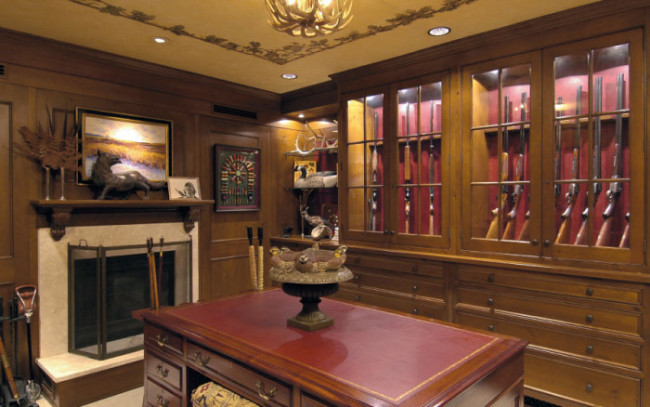
- Home office cabinets: awards, collectibles, and display pieces need compartments sized to show them, not just store them.

Don’t Reinvent the Standard Sizes
Custom doesn’t mean every dimension must be original. Set sizes exist because they fit common needs: your cutlery drawer will likely be the standard cutlery-drawer size, and everyday kitchen cabinets in Toronto follow well-tested norms for good reason. There’s no need to reinvent the wheel unless you genuinely have a unique need. The craft of custom sizing is knowing where your life deviates from the average, and spending the customization there.
Depth: Deeper Isn’t Automatically Better
The instinct is to maximize every dimension, but depth is where that backfires. A cabinet much deeper than its contents buries small items in the dark at the back, where they’re forgotten. Shallow sections keep everything visible in one glance; deep sections earn their keep only for genuinely deep contents, bins, luggage, equipment. Matching each section’s depth to what it actually holds beats one uniform depth throughout, and it’s a question your designer should ask compartment by compartment.
Height and the Reach Zone
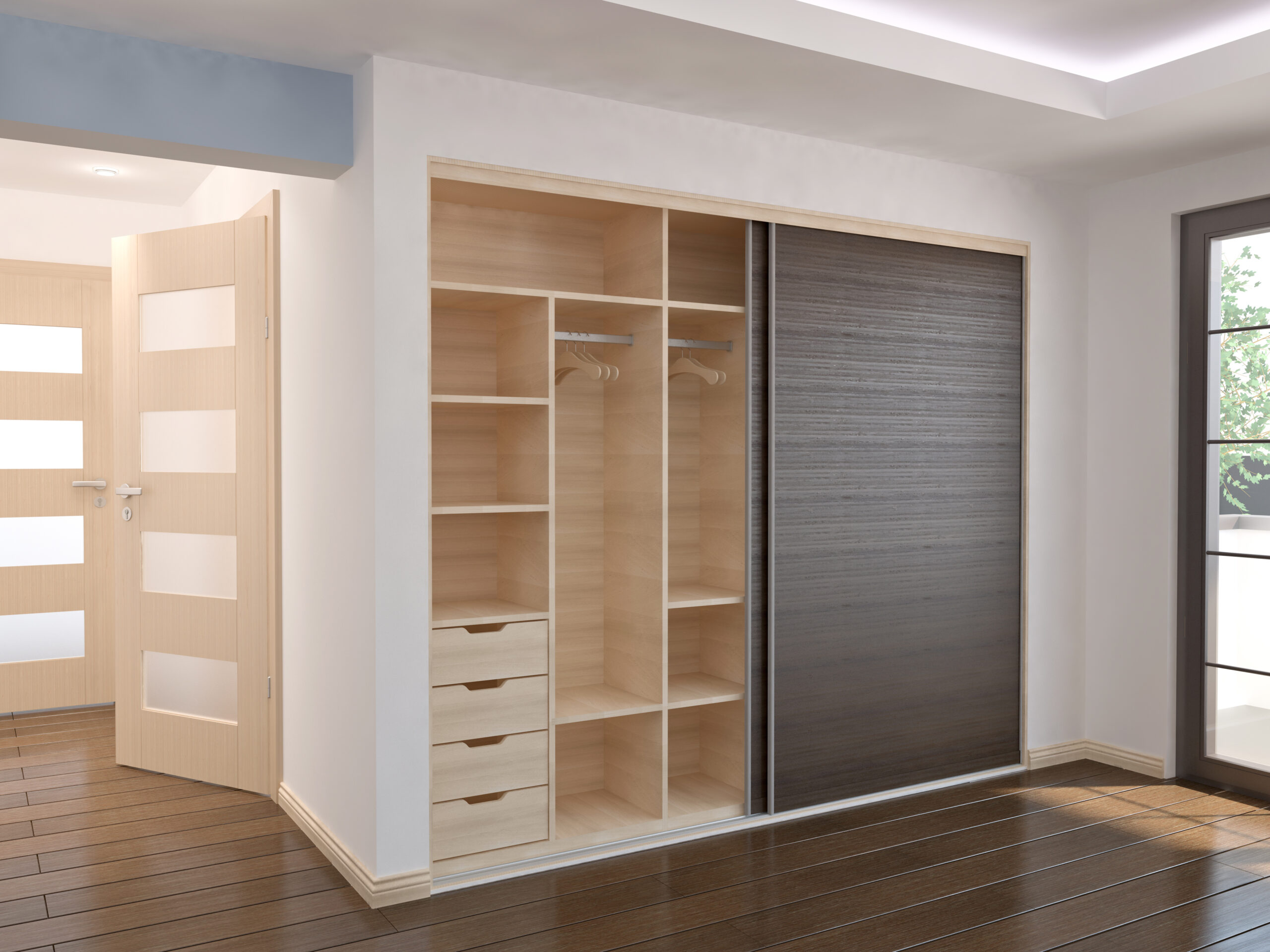
Think of the wall in three bands. As a rule of thumb, the comfortable zone, roughly between knee and shoulder height, belongs to whatever you touch most often. Above that, lighter and less-frequent items; the top is for the things you retrieve a few times a year. Heavy items should never live overhead. When a cabinet design puts your daily-use items in the comfortable band and pushes the rarely-used up high, the room simply works better, every day, without anyone thinking about it.
Then Measure the Room Itself
The cabinets also can’t be so large that they overwhelm the space they’re going into. Measure the room where the cabinetry will live, wall lengths, ceiling height, and the doors, windows, vents, and outlets the design must respect. A skilled cabinet designer takes those room measurements together with your largest-item measurements and reconciles the two into cabinets that fit the wall, clear the swing of every door, and hold exactly what they were designed to hold.

Cabinet Sizing Questions, Answered
Should I measure my belongings before ordering cabinets?
Measure the largest ones. At least one cabinet section must fit your biggest items, golf clubs or an air compressor in the garage, framed awards in an office, and those outliers set the design requirements. Skip measuring everything else; common items fit well-established sizes.
When are standard cabinet sizes good enough?
Whenever the contents are common and predictable. A cutlery drawer doesn’t need reinventing, and everyday kitchen storage follows proven norms. Custom sizing pays off where your belongings or your room deviate from the average, that’s where the customization budget should go.
How deep should storage cabinets be?
As deep as their contents, and not much deeper. Oversized depth buries small items at the back where they’re forgotten; shallow sections keep everything visible and reachable. The best designs vary the depth section by section to match what each compartment actually holds.
What height should the most-used shelves be?
In the comfortable reach band, as a rule of thumb, roughly between knee and shoulder height for daily-use items. Lighter, less-frequent things go higher; the rarely-touched go on top; heavy items should never be stored overhead. Sort your belongings by frequency of use and the shelf heights design themselves.
Who takes the final measurements before cabinets are built?
The cabinet designer. Your notes on what you’re storing plus the room’s dimensions go to a skilled designer, who reconciles the two and confirms the site measurements before anything is built, so the finished cabinets fit the wall, clear every door swing, and hold what they were designed for.
Not sure what size your cabinets should be? Call Space Age Closets & Custom Cabinetry at (647) 394-7557. We design custom storage cabinets in Toronto sized to your belongings, your room, and nothing else.