Space Age Closets & Custom Cabinetry designs and installs custom entertainment built-ins for homes across Toronto and the GTA, and the projects that go smoothest all start the same way: with a homeowner who arrives at the design meeting knowing what the unit has to hold, where everyone will sit, and how the electronics need to behave. So what do you actually need for a custom entertainment built-in? A seating plan, a full inventory of your devices, a power and protection plan, and a few honest decisions about what gets displayed and what gets hidden. Here is the checklist, in the order we work through it.
Plan the Seating Before the Shelving
Design the unit so the seating gets the best possible view, not the other way around. There’s nothing worse than gathering friends and family to watch something and discovering half the room can’t see the screen comfortably. Think about what kind of seating the room will have: a formal living room with upright chairs puts eyes at a different height than a rec room where everyone sinks deep into soft couches, and the TV bay should be positioned for where heads actually end up. Sort the seating plan first and every other dimension of the built-in falls into place behind it.

Take Inventory of Every Device
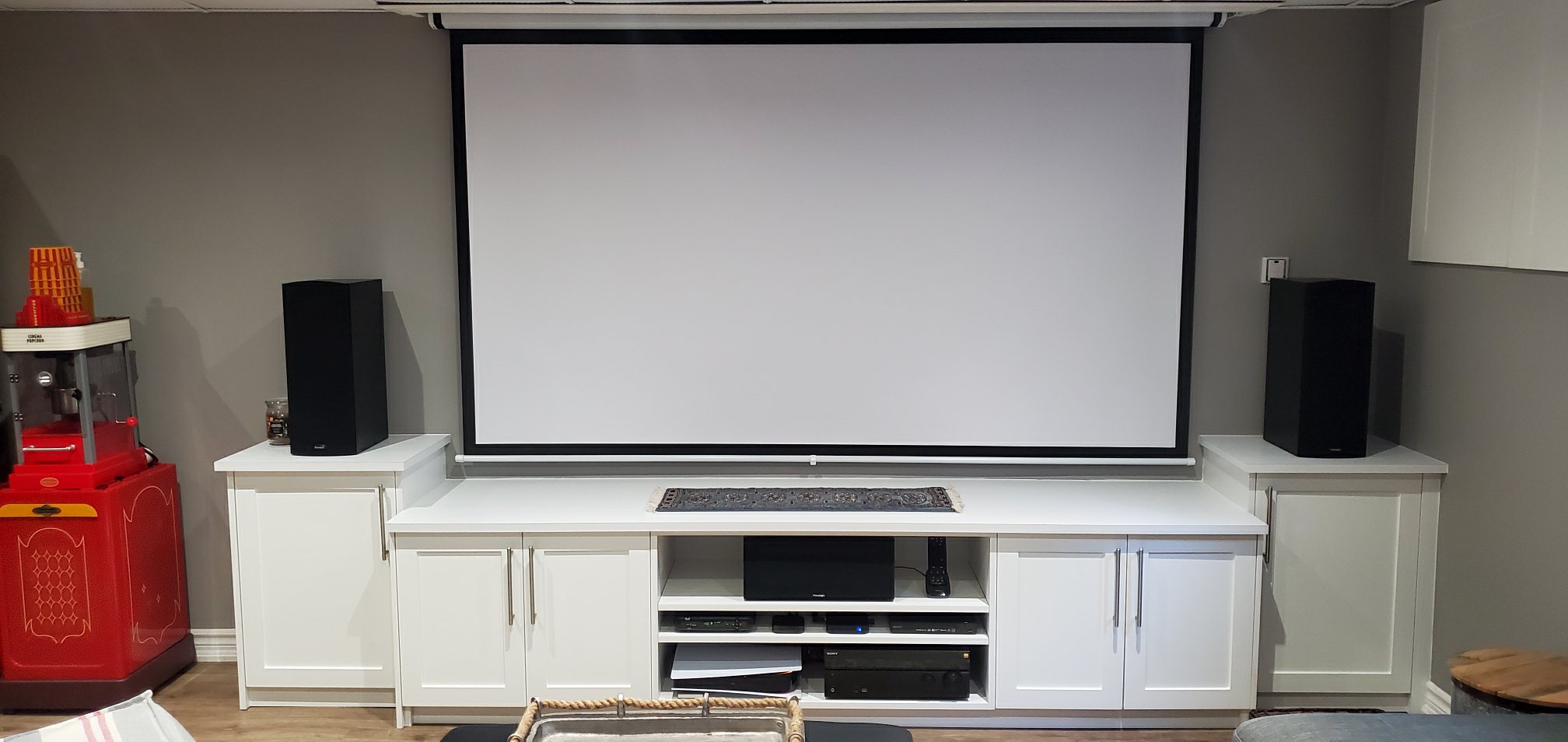
Before any drawing starts, list everything the unit must house: the television, receiver, gaming consoles, modem and router, streaming boxes, and every peripheral that plugs into them. The list decides how many closed bays the unit needs, how deep they must be, and where heat-producing components need breathing room. Clients are consistently surprised by how long their list gets, and that’s the point; a bay you didn’t plan for is the difference between a clean built-in and a power bar on the floor beside it.
Give the Speakers a Home
Speakers are what make the whole system come alive, and they’re the item clients most often forget to mention. Placement matters twice: speakers need the right positions to perform properly, and they need to do it without cluttering the design. There’s nothing worse than a beautiful built-in with speakers perched on top of it, especially when they could have been integrated from the start. Tell your designer exactly what audio you run, from a single soundbar to a full surround setup, and the unit will be designed so every speaker performs well and effectively disappears.

Power, Protection, and Room to Grow
Decide where the electronics will live and plan the power to match. A surge protector may seem unnecessary right up until the moment it isn’t; valuable electronics can be ruined in an instant without proper protection, so build it into the plan rather than dangling it off an outlet later. While you’re at it, plan spare capacity: an empty outlet and a little elbow room in one bay costs nothing now and saves real frustration when the next console or streaming device arrives.

Doors, Mesh Fronts, and the Remote Problem
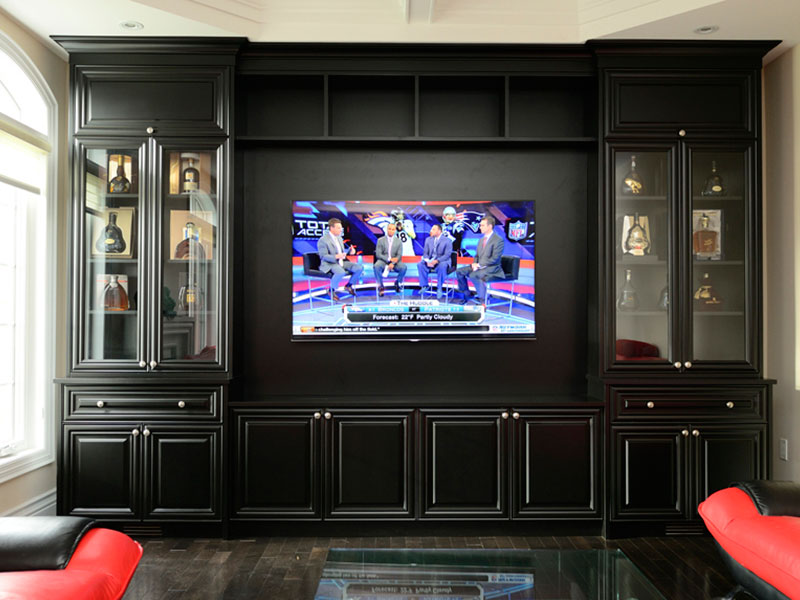
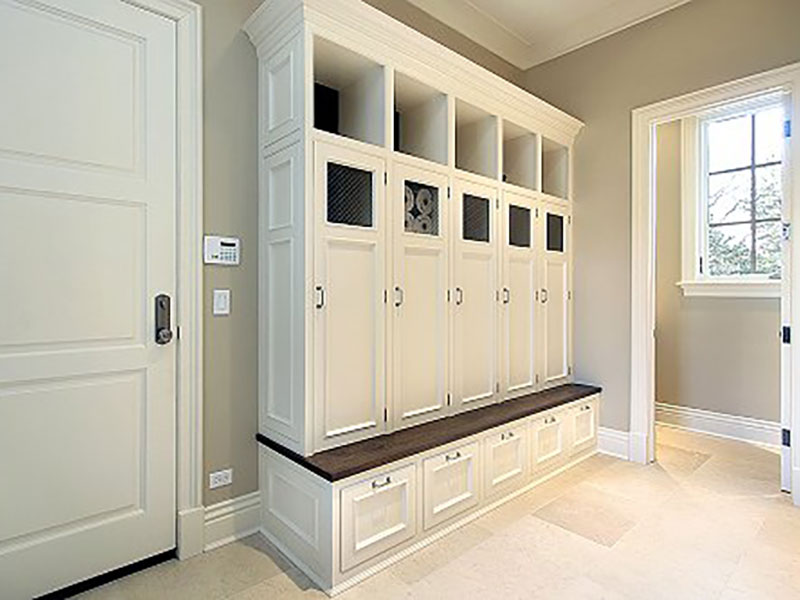
An entertainment unit exists to house electronics and their clutter, so decide early what gets hidden behind doors. Solid doors give the cleanest look but block remote signals; decorative mesh fronts solve both problems at once, hiding the boxes while letting remotes work and air circulate. We’ve been using a decorative mesh supplier, a Canadian one, for years, with a wide selection of styles that add a genuine designer touch. It’s one of those details that separates a piece of cabinetry from a piece of furniture you’re proud of.

Light the Display, Not the Screen
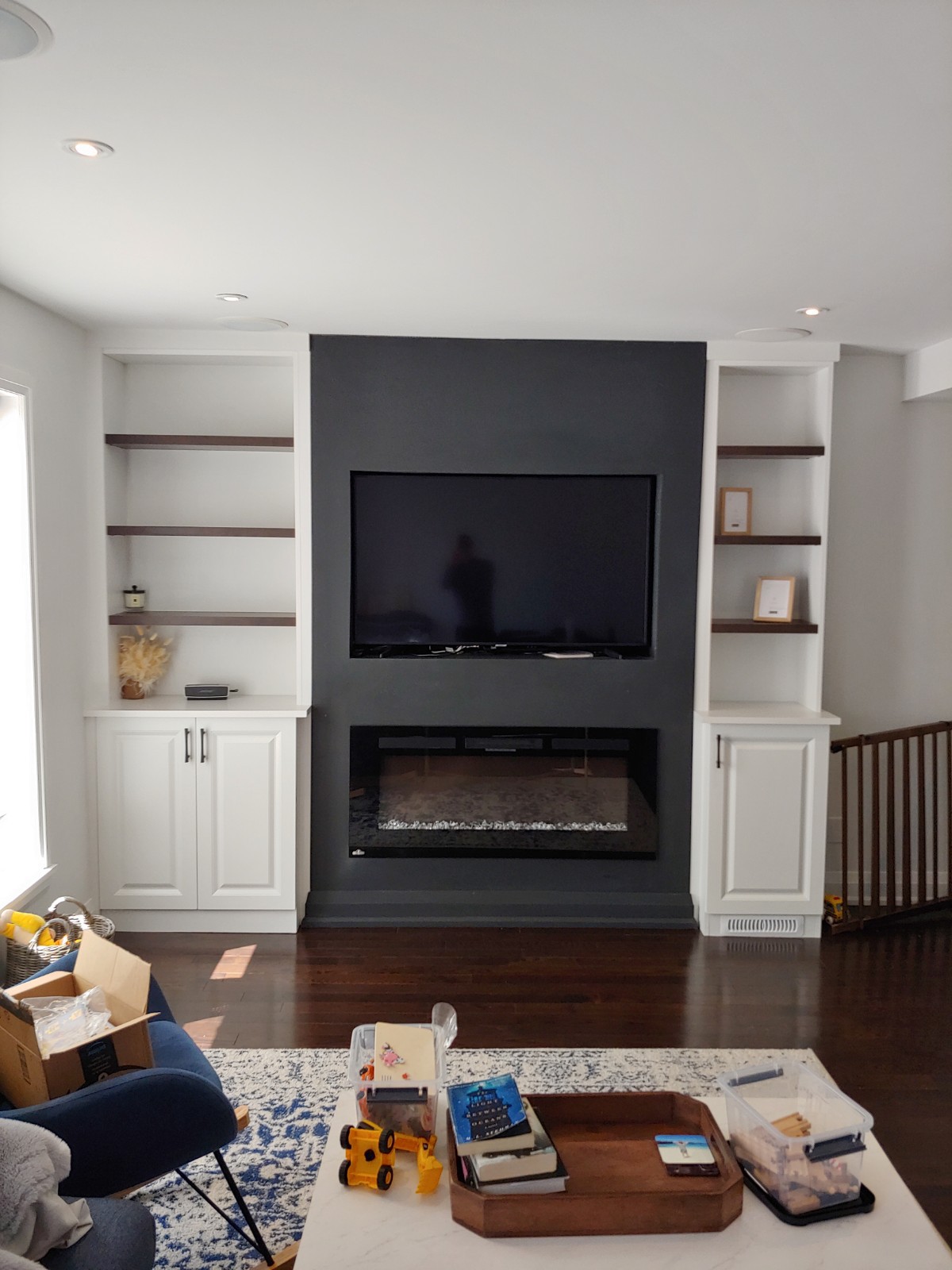
Lighting is paramount, but aim it carefully: a spotlight anywhere near the TV creates glare on the screen. The right approach lights the display sections flanking the television so your shelves and collectibles pop while the screen stays glare-free. LED lighting has served our projects well for years, with one technical note worth writing down for your designer: LEDs need a properly sized transformer, or their lifespan will be cut short. It’s exactly the kind of detail that should be settled on paper, not discovered after installation.
Bring the List to the Design Meeting
So, what do you need for a custom entertainment built-in? Your wall’s rough measurements and a few photos of the room, your full device inventory, your screen size including any upgrade you’re eyeing, your seating plan, and your honest split between display and hidden storage. Bring that list and an experienced designer can turn it into a unit that looks like it was always part of your home. You can see how we approach these projects on our custom built-in wall units in Toronto page.

Entertainment Built-In Planning Questions, Answered
What height should the TV be in a custom built-in?
Where your eyes actually land from your real seating, which depends on the furniture: deep, soft couches that you sink into put your eye line noticeably lower than upright formal seating. That’s why we ask about the seating plan before sizing the TV bay, so the screen sits comfortably for the way your household actually watches.
Do I need a surge protector inside an entertainment unit?
Yes, and it should be planned into the cabinetry rather than added as an afterthought. A built-in concentrates thousands of dollars of electronics in one place, and a single surge can ruin them in a moment. Planning the protector’s location during design keeps it accessible but invisible, with the cabling routed cleanly behind the unit.
Will my remotes work if the electronics are behind cabinet doors?
With the right door fronts, yes. Decorative mesh panels hide the equipment while letting remote signals and airflow pass straight through, so you never open a door to change the channel. Solid doors can work too for gear that doesn’t need line of sight, like modems; your device list tells the designer which is which.
Where should speakers go in a custom entertainment centre?
In positions chosen for sound first, then integrated so they don’t clutter the design. Good placement is what makes the system perform, but speakers scattered on shelves and floors undo the whole point of a built-in. Share your exact audio setup at the design stage and the unit will be drawn around it, with every speaker housed and hidden.
What should I have ready before an entertainment built-in design meeting?
Five things: rough wall measurements with a few photos of the room, a complete list of your electronics and peripherals, your TV size including any planned upgrade, a sense of where the seating goes, and your preference for what’s displayed versus hidden. With those in hand, the first design meeting produces a real plan instead of a list of homework.
Ready to plan your entertainment built-in properly? Call Space Age Closets & Custom Cabinetry at (647) 394-7557 or book a free in-home design consultation. We’ve designed and installed custom cabinetry across Toronto and the GTA since 1989.