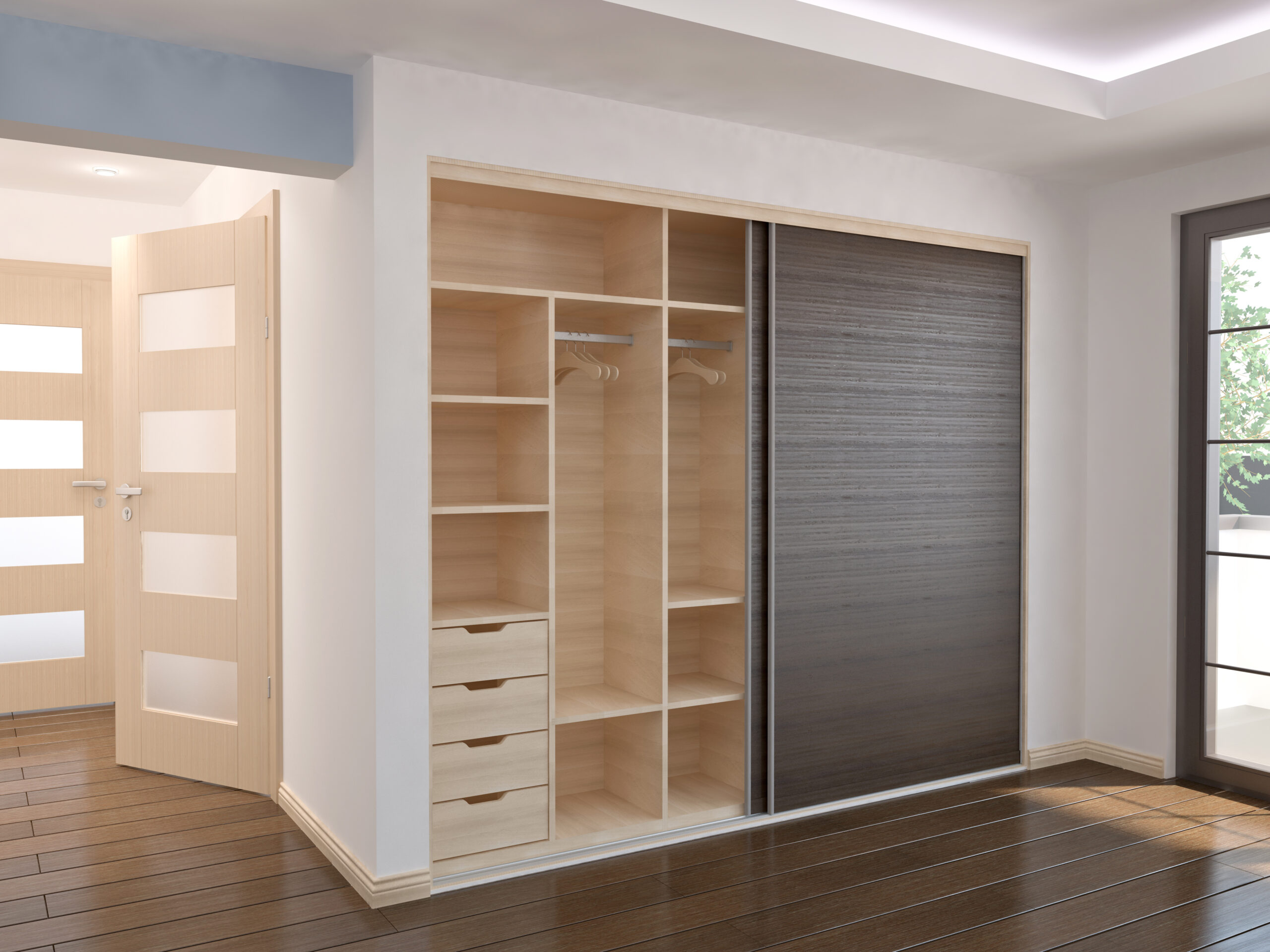
Space Age Closets & Custom Cabinetry builds custom laundry room storage for homes across Toronto and the GTA, and the single biggest upgrade isn’t a bigger machine, it’s a layout that does the thinking for you. When the right things are on hand, in the right spots, laundry takes measurably less time and effort. Here’s how to make your laundry room work harder, step by step through the way the chore actually flows.
Map the Route Laundry Actually Takes
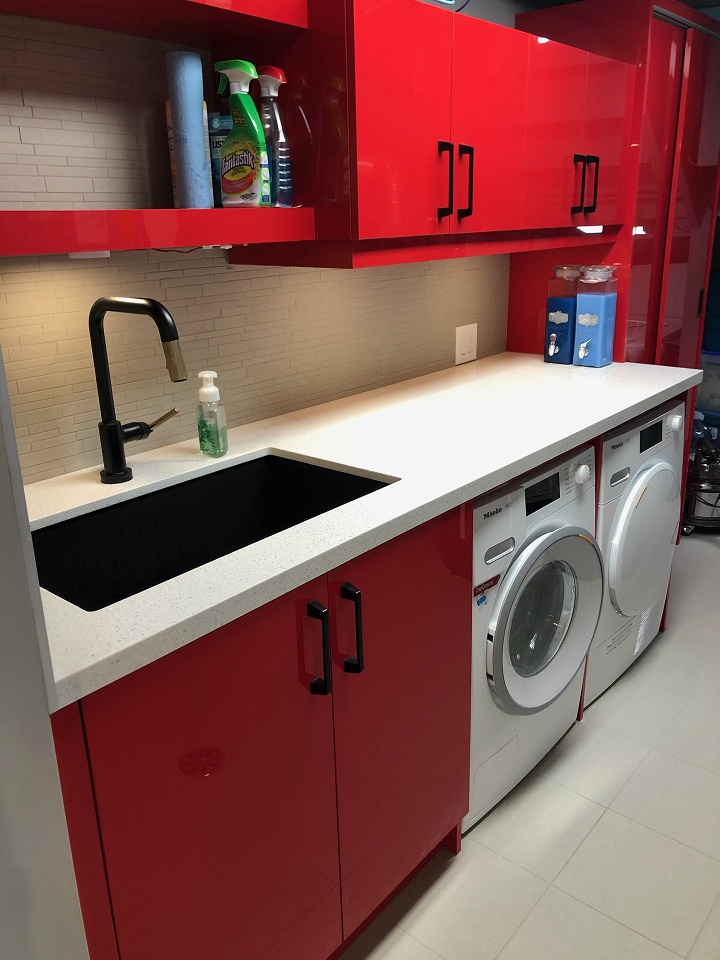
Every load follows the same path: in the door, into the washer, into the dryer, then hung or folded, then out. The most efficient laundry rooms simply place each tool where its step happens, supplies beside the machines, hanging space where wet clothes come out, a bin where the lint gets pulled. Before adding a single cabinet, walk the route with a real load of laundry and note every time you leave the room to fetch something. Each of those trips is a storage decision waiting to be made. This is the planning behind our custom laundry room cabinets in Toronto.
Detergent and Soaps: The Most Important Part
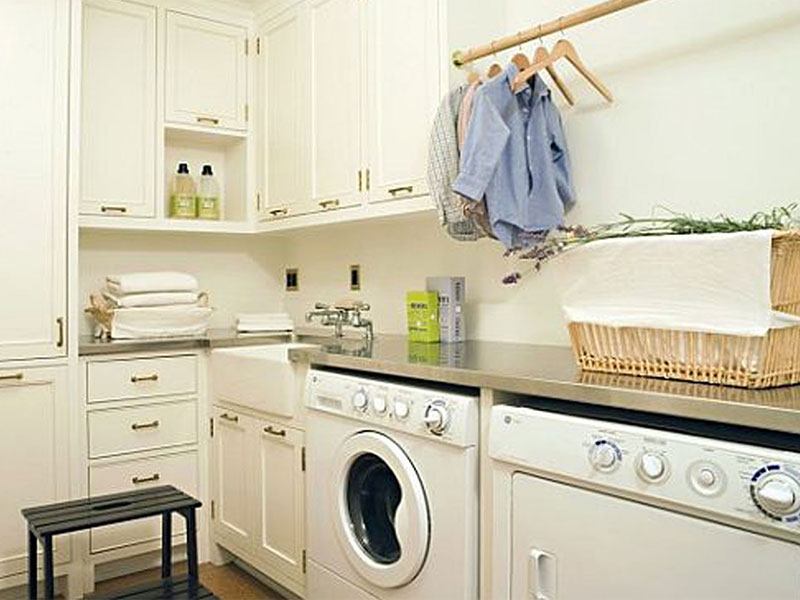
Besides the machines themselves, the most crucial items in the laundry room are the soap, detergent, and dryer sheets. Give them one dedicated cabinet, positioned as close to the machines as possible, ideally so you can reach the detergent with one hand while loading with the other. That single decision eliminates the find-it, carry-it-over, carry-it-back routine from every single load, which is exactly the kind of small friction a good layout removes.

An Open-Air Hanging Station
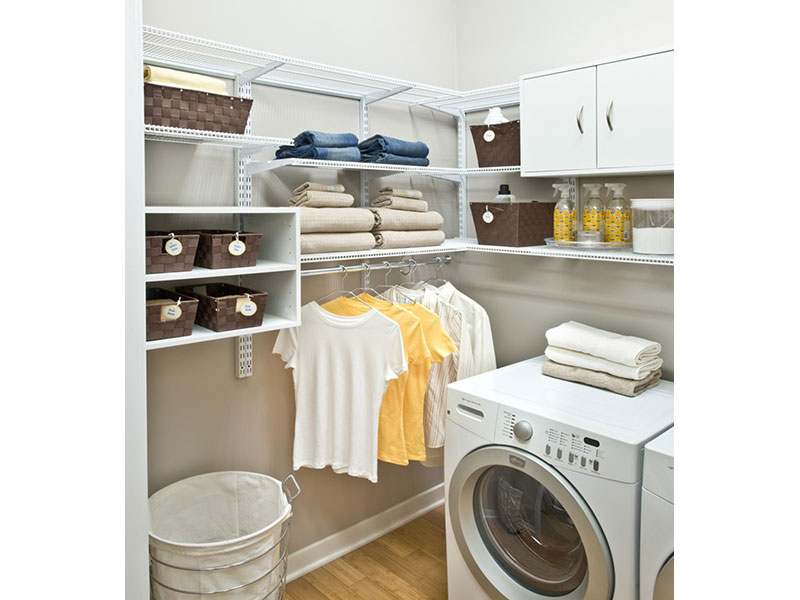
Whether some of your clothes must hang-dry or you simply want to save energy by hang-drying more, the racks belong in the laundry room itself, otherwise every delicate item sends you hunting for a door frame somewhere in the house. Build the hanging rack into an open cabinet section without a door: the open-air design keeps air flowing around the clothes while they dry. Position it within a step of the washer so wet items travel inches, not hallways.
The Ironing Board That Disappears
An ironing board takes up a lot of room for a tool many households use only occasionally. The layout answer is a fold-up version that sits flat against the wall, like a Murphy bed, tucked into a cupboard about the same size as the board. Position that cupboard so the board is usable the moment it folds out, with the iron stored beside it. You get a full pressing station on demand, and zero floor space claimed the rest of the week.
The Small Stuff: Lint, Bins, and Chemicals
Where does the dryer lint go? If the answer is “a garbage can somewhere else in the house,” the layout is leaking time. A small garbage can earns a permanent spot: in a dedicated cupboard to keep floor space clear, foot-operated so your hands stay free, and close to the dryer for quick disposal after every load. Stain removers and specialty chemicals deserve the same intention, stored securely in several small, separate cabinets, apart from other cleaning products, for safety.

One Room, Working Harder
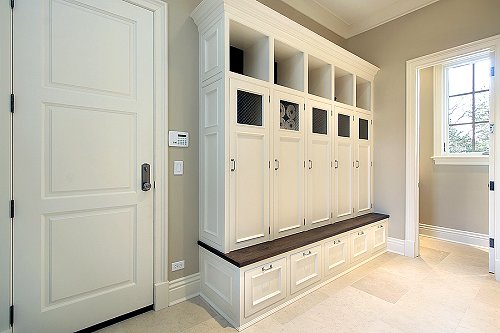
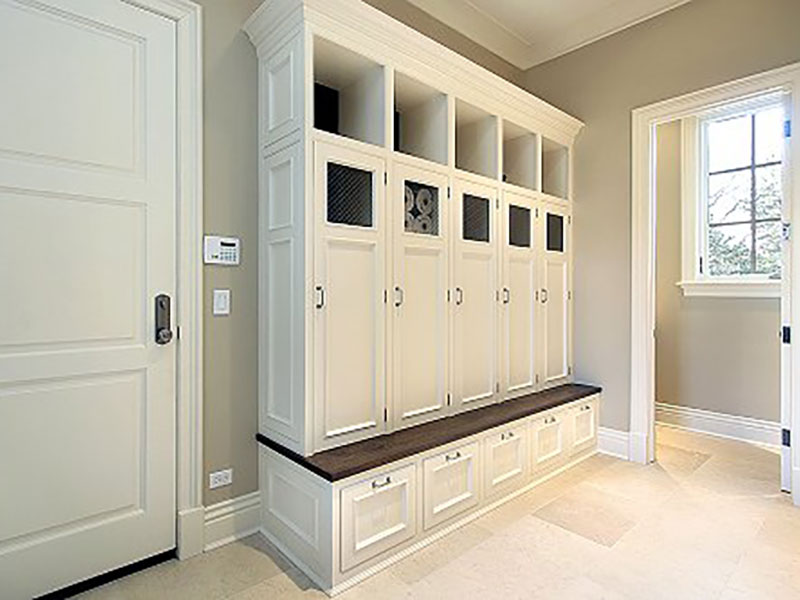
None of these pieces is dramatic on its own; together they turn the laundry room from a place clothes wait into a station where the whole chore completes in one spot. If your laundry area shares the back entry of the house, the same cabinetry thinking extends naturally into mudroom storage, so the room earns its keep coming and going.
Laundry Room Questions, Answered
What’s the most efficient laundry room layout?
One where every step happens within a step or two: supplies in a cabinet beside the machines, hanging space where wet clothes come out of the washer, a lint bin at the dryer, and the ironing board where it’s used. When the room mirrors the wash-dry-hang-fold sequence, the chore takes noticeably less time and effort.
Where should the ironing board live in a laundry room?
Folded flat against the wall like a Murphy bed, inside a cupboard sized to match the board, positioned so you can iron right where it folds out. It’s a bulky tool that may only see occasional use, so it shouldn’t claim permanent floor space between sessions.
How should a hang-dry area be set up?
Put hanging racks in the laundry room itself, inside an open cabinet section without a door, the open-air design keeps air moving so clothes dry properly. You stop hunting for places around the house to hang things, and hang-drying more of the load trims dryer energy use too.
Where should detergent and dryer sheets be stored?
In one dedicated cabinet as close to the machines as possible. Soap, detergent, and dryer sheets are the most-used items in the room after the machines themselves, so storing them at the point of use removes the fetch-and-return trip from every load you run.
Does a laundry room really need its own garbage can?
Yes, mostly for dryer lint. Without one, every empty of the lint filter means a walk to a garbage can somewhere else in the house. A small foot-operated bin in a dedicated cupboard close to the dryer keeps hands free and gets the filter emptied every load instead of eventually.
Want a laundry room that works this hard? Call Space Age Closets & Custom Cabinetry at (647) 394-7557. We design and install smart laundry room storage for homes across Toronto and the GTA.