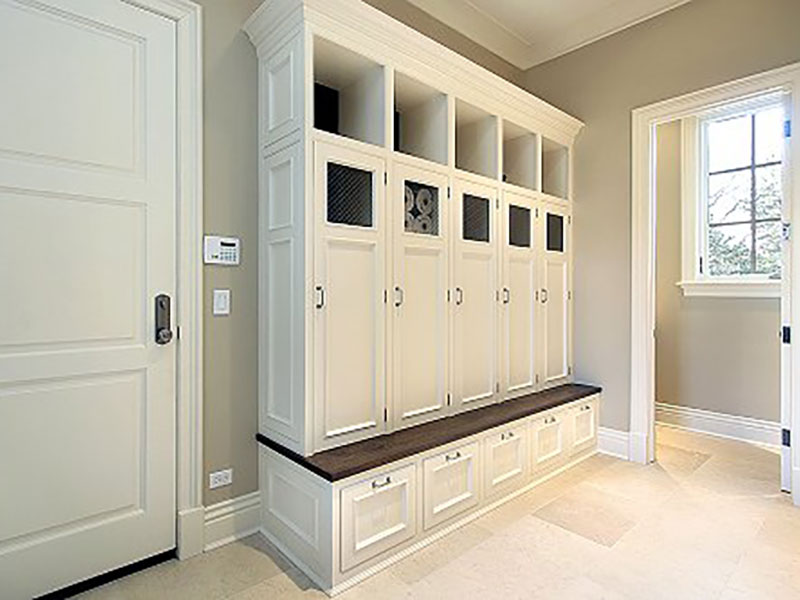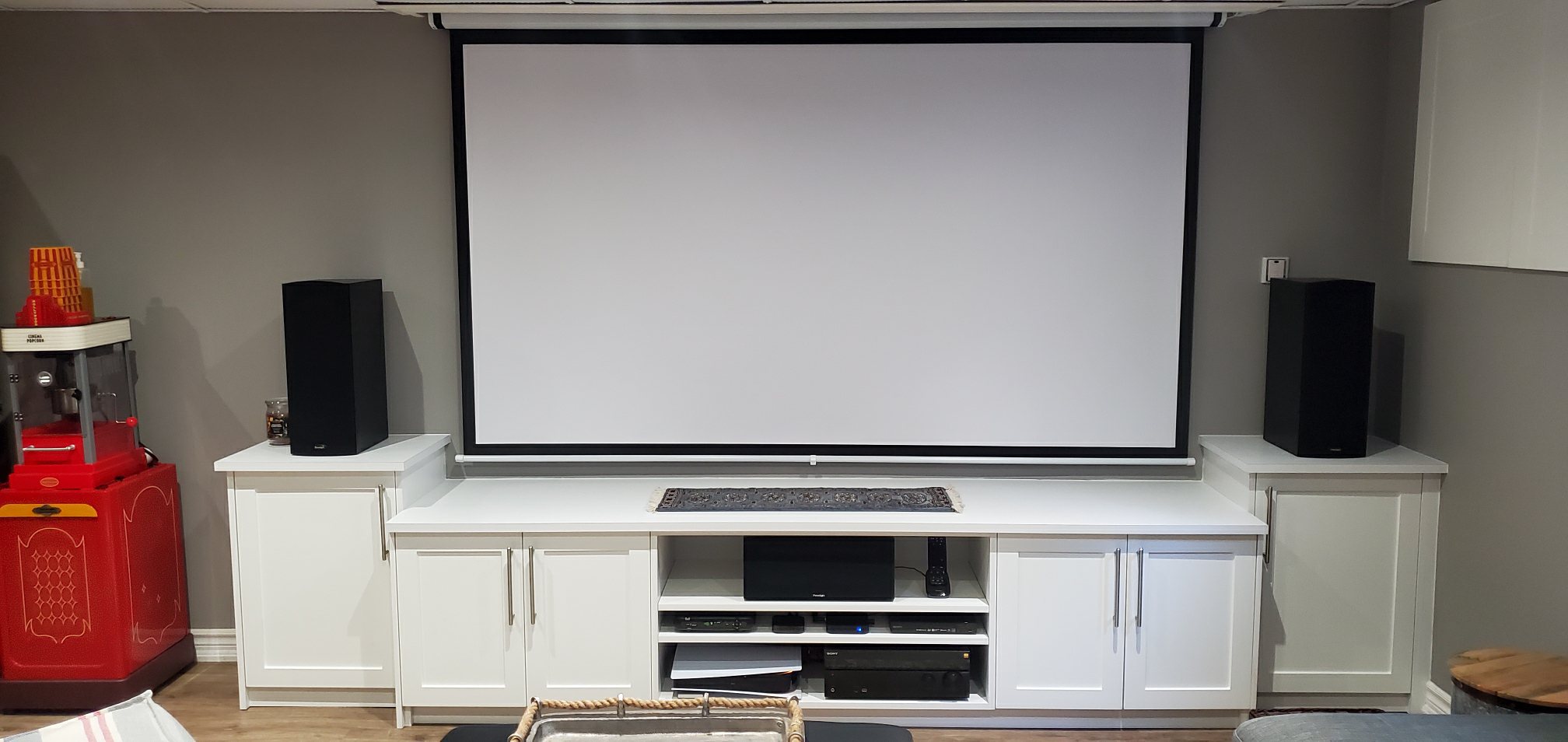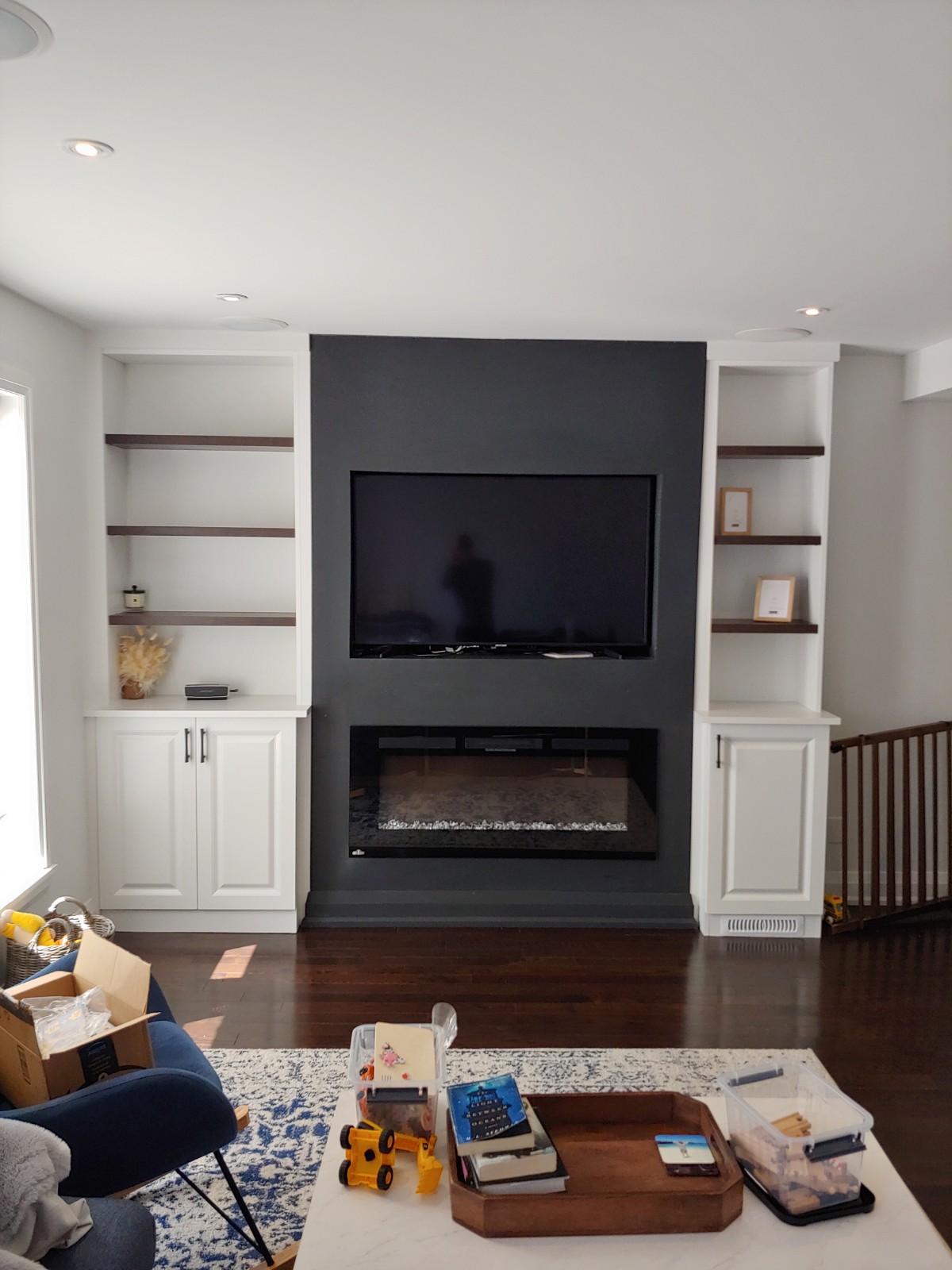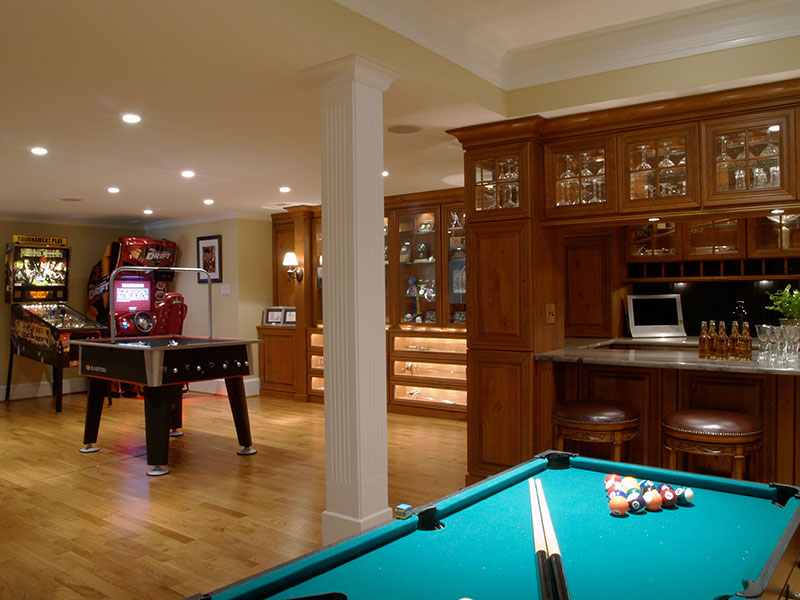
Choosing materials for a laundry room is different from any other room in the house. The short answer: moisture-resistant melamine (thermally fused laminate) is the best all-round material for laundry room cabinets — it shrugs off humidity, heat and detergent splashes, wipes clean in seconds, and costs meaningfully less than solid wood. Wood veneer is the upgrade for a furniture look; painted MDF suits main-floor laundry rooms that guests see; and solid wood, while beautiful, needs the most care in this environment.
Space Age Closets & Custom Cabinetry has designed and built custom laundry room cabinets in Toronto since 1989, every cabinet built to measure for its room. Here is our honest, updated guide to what holds up and what doesn’t.

Why the Laundry Room Is the Toughest Room for Cabinetry
Before comparing materials, understand what they’re up against:
- Humidity and heat — every dryer cycle raises both; basement laundry rooms in Toronto add year-round damp
- Detergent, bleach and softener splashes — chemicals that stain or lift cheap finishes
- Wet clothing draped, dripped and stacked against surfaces
- Vibration from spin cycles, transferred into everything nearby
A material that thrives in a bedroom closet can swell, peel or stain here. That’s the lens for everything below.
The Materials, Compared
| Material | Moisture Resistance | Ease of Cleaning | Look | Relative Cost |
|---|---|---|---|---|
| Melamine / TFL | Excellent | Excellent — wipe and done | Huge range: solids, woodgrains, textures | $ |
| Wood veneer | Very good (sealed) | Very good | Real-wood surface | $$ |
| Painted MDF (shaker) | Good (quality finish) | Good | Classic, kitchen-like | $$ |
| Solid wood | Fair — needs sealing & care | Fair | Beautiful, heaviest | $$$ |
Melamine (thermally fused laminate) — the workhorse

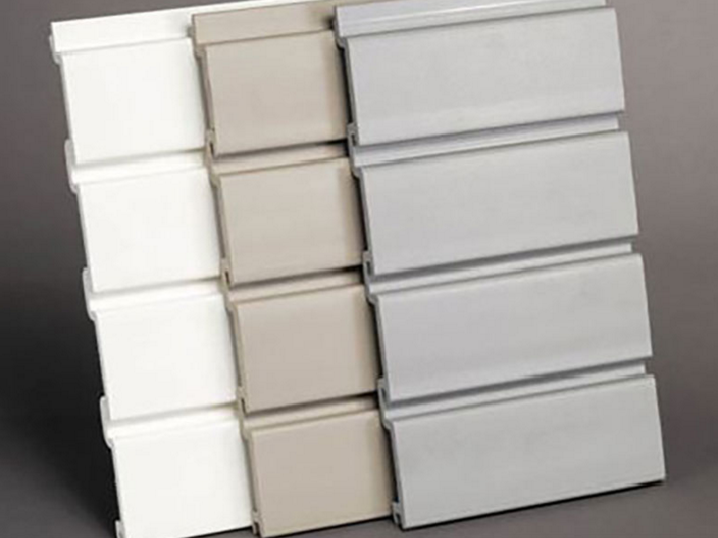
What it is: a dense engineered-wood core with a resin-saturated decorative layer fused onto it under heat and pressure — the surface and the board become one piece, which is why it doesn’t peel like old glue-on laminates. Modern melamine is nothing like the flat white boards of the 1990s. Today’s thermally fused laminates come in convincing woodgrains and textured matte finishes, bonded to a dense core. In a laundry room it is the practical winner: the surface doesn’t absorb moisture, detergent wipes off without staining, and it resists the heat radiating off a dryer. It’s also the most budget-friendly option — see our laundry room cabinets cost guide for what that means in dollars.
Wood veneer — the best of both worlds

What it is: a thin slice of genuine hardwood — real grain, real character — bonded over a stable engineered core, then sealed. You touch actual wood; the core underneath does the structural work. You get the authentic grain and warmth of wood with far better dimensional stability than solid lumber — the core doesn’t swell and shrink with every laundry day the way solid wood can. Properly sealed, veneer is our recommendation for clients who want a furniture-grade look in a hardworking room.
Painted MDF — for the laundry room guests see
What it is: medium-density fibreboard — wood fibres compressed with resin into a perfectly smooth, stable panel that takes paint better than solid wood (no grain telegraphing, no seasonal cracking at the joints). It’s what quality painted shaker doors are made of. Main-floor and upper-floor laundry rooms have become design statements in Toronto renovations. Painted MDF shaker doors deliver that custom-kitchen look. Quality matters here: a properly primed and finished MDF door handles normal laundry humidity well, but it is less forgiving of standing water than melamine — keep it off the floor near sinks.
Solid wood — beautiful, with conditions

What it is: cabinetry cut from actual lumber — maple, oak, walnut — the traditional material. Beautiful and repairable, but wood is a natural material that keeps absorbing and releasing moisture forever, which is exactly what a laundry room tests. Real wood has weight, texture and character nothing else matches. In a laundry room, it demands respect: a robust stain-and-seal system, good ventilation, and owners willing to wipe up splashes promptly. We source and build with quality hardwoods when the design calls for it — and we’ll tell you honestly when veneer will serve you better.
Plywood and MDF cores — the part you don’t see

What it is: the structural board underneath any finish. Plywood is thin wood layers glued in alternating directions (strong, screw-friendly); MDF and high-density particle cores are engineered fibre panels (flat, stable, ideal under melamine and veneer). The core under the surface matters as much as the finish. Dense engineered cores and quality plywood resist sagging under detergent jugs and stacked linens and hold screws firmly through years of vibration. It’s a big part of the difference between custom cabinetry and flat-pack big-box units that soften at the first leak.
What We Recommend for Toronto Laundry Rooms
- Basement laundry (most Toronto semis and bungalows): melamine/TFL throughout — the humidity-proof choice
- Main-floor or upstairs laundry: painted MDF or woodgrain melamine for looks, melamine interiors for durability
- Laundry + mudroom combos: textured melamine — hides scuffs from boots and baskets
- Around sinks: moisture-resistant cores and sealed edges, always
Every cabinet we install is built to measure, so materials, colours and finishes are matched to your home rather than a catalogue, and edges are sealed properly, which is where cheap cabinets fail first.
Frequently Asked Questions
Will melamine cabinets peel in a humid basement laundry room?
Quality thermally fused laminate with properly sealed edges will not — peeling happens with cheap edge-banding and standing water. This is the environment melamine is best at.
Can I use regular kitchen cabinets in a laundry room?
You can, but they’re designed for different depths and duties — no hamper pull-outs, no drying solutions, and standard sizes that waste space around machines. Custom cabinets are built for your machines and your room’s actual dimensions.
What finish colour hides detergent drips and lint best?
Mid-tone textured woodgrains hide the most day-to-day mess. Pure white looks crisp but shows lint; very dark finishes show detergent residue and dust.
What’s the most budget-friendly material that still lasts?
Melamine/TFL, by a wide margin — most durable per dollar in a laundry environment. Spend the savings on a folding counter or pull-out hampers instead.
Get the Right Material for Your Laundry Room
The right answer depends on where your laundry room is, how hard it works, and the look you want — exactly what a free in-home consultation settles. We’ll measure, recommend materials honestly, and design your room with an exact quote before anything is built.
Book at spaceageclosets.com/contact-us or call (647) 394-7557. See full layouts on our laundry room cabinets and storage page — Space Age Closets & Custom Cabinetry, building locally since 1989.