Space Age Closets builds custom pantry cabinetry for kitchens across Toronto and the GTA, and the problem we’re asked to solve most often is the same one: a deep pantry where food disappears into the back and expires unseen. Good deep pantry organization starts with the cabinet itself, get the bones right and the tidying takes care of itself. Here’s how we approach it, whether you’re reworking what you have or building fresh.

Start With the Bones: Height and Depth
Before a single jar gets bought, look at two measurements. First, height: a pantry should be designed around how far you can comfortably reach, and anything above that line is stepladder territory, plan for the ladder rather than pretending you’ll never need one. Second, and more important, depth. Eighteen inches is the honest limit for a fixed shelf. Past that, the back half of every shelf becomes a dumping ground for unwanted and forgotten items, the tsunami of stuff that greets you when the door opens. If your pantry is deeper than eighteen inches, it needs pull-outs.
Pull-Out Shelves: The Deep-Pantry Fix
Pull-out shelves and drawers turn depth from a liability into capacity. The whole shelf slides out to meet you, so the can at the back is exactly as visible as the can at the front, there simply is no “back of the cupboard” anymore. In the pantries we build, the lower sections get full-extension pull-out drawers for the heavy goods, and the mid-height sections get shallower pull-out trays for jars, tins, and packets. It’s the single upgrade clients tell us changed how they cook.

Decant, Contain, and Label Everything
Most food packaging is dramatically bigger than the food inside it. Break the cereal, pasta, flour, and rice out of their boxes and into uniform, well-sealed containers, glass is our pick, because it’s durable, you can see the contents at a glance, and it lasts for decades rather than seasons. Then the big secret: label, label, label. Uniform containers stack and line up so nothing hides behind an odd-shaped box, and labels mean anyone in the house can find the oats and put them back where they came from.
Zone by Frequency and Weight
With everything visible and contained, placement is simple logic. The items you use daily live between waist and eye level, where no reaching or bending is involved. Heavy things, cases of cans, small appliances, the big bag of flour, belong on the low pull-out drawers, where sliding beats lifting. The top shelves take the light, rarely used items: never anything heavy or awkward up high, where getting it down is a two-person job. Once each zone has a purpose, the pantry re-sorts itself every time you unload groceries.
When the Bones Themselves Are the Problem
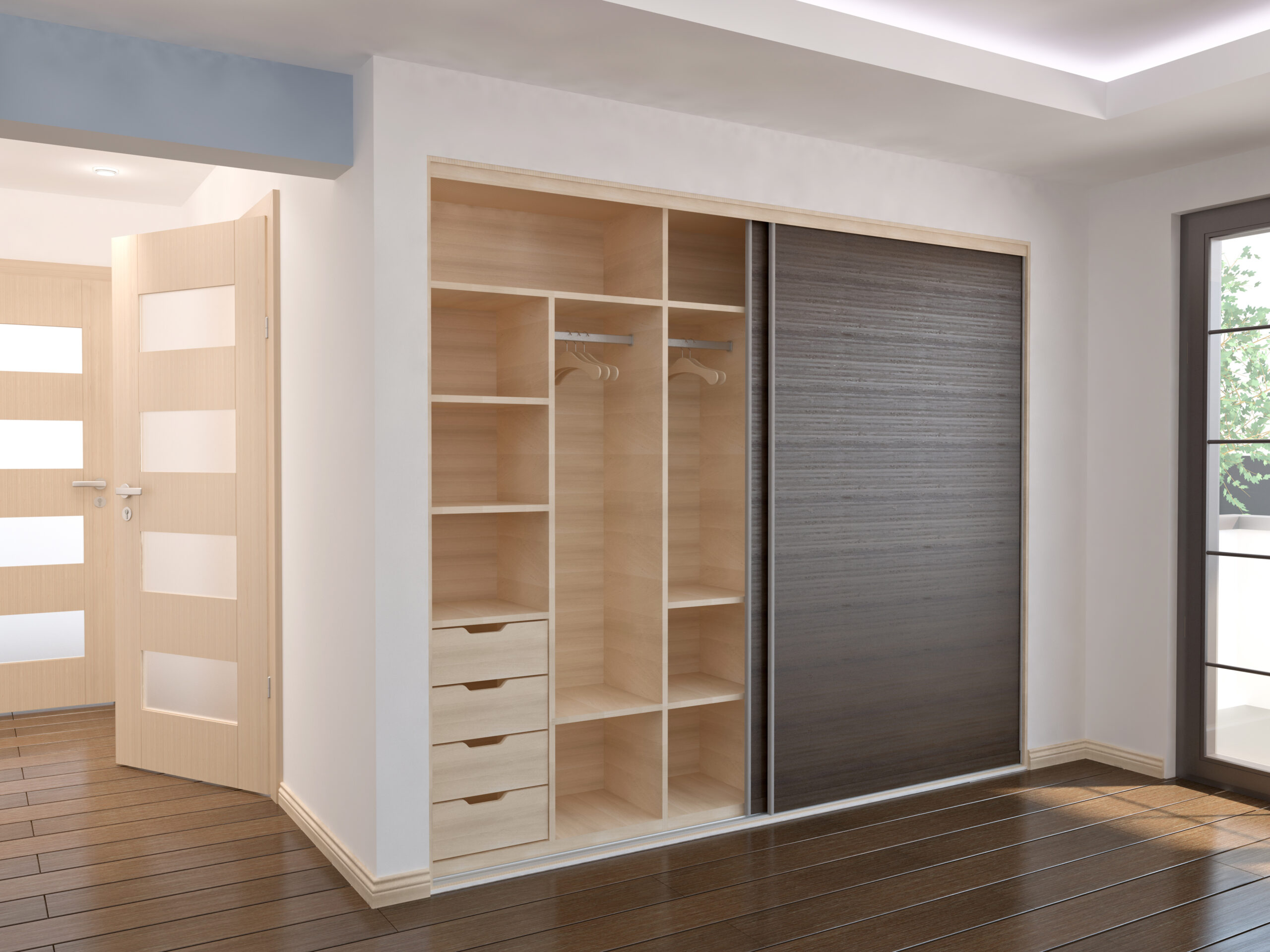
Containers and zones can only do so much inside a cabinet that was never designed for food storage. If your kitchen has a deep builder’s closet with four fixed shelves, or no pantry at all, that’s where custom cabinetry earns its keep: pull-outs sized to your containers, shelf spacing matched to your cooking, and every cubic inch reachable. That’s exactly what we build with a custom pantry in Toronto kitchens, measured to your wall, your reach, and the way your household actually eats.
Pantry Organization Questions, Answered
How deep is too deep for a fixed pantry shelf?
Anything past about eighteen inches. Beyond that, the back of the shelf falls out of sight and out of use. It becomes the place food goes to expire. Deeper cabinets aren’t a problem in themselves; they just need pull-out shelves or drawers so the full depth stays visible and reachable.
Are glass or plastic containers better for pantry storage?
Glass, in our experience. It seals well, doesn’t stain or hold odours, shows you the contents and the level at a glance, and survives years of daily use. The one caveat is weight, keep the big glass jars on lower shelves or pull-out drawers rather than overhead.
What should go on the top pantry shelf?
Light, rarely used items only, seasonal bakeware, the punch bowl, backup paper goods. Never anything heavy or awkward, because everything up there comes down over your head, usually from a stepladder. If you find yourself climbing for it weekly, it’s zoned wrong and belongs lower.
How do I stop food expiring in the back of the pantry?
Remove the “back”, pull-out shelves make the whole depth visible, which is most of the battle. Then load new groceries behind or beneath the older stock so the oldest gets used first. Clear, labelled containers finish the job: you can’t forget what you can see.
Can a hall or broom closet be converted into a pantry?
Very often, yes, many Toronto kitchens, especially in older homes, have a deep closet nearby that’s wasted on mops. Fitted with pull-out drawers, adjustable shelving, and proper depth planning, that same footprint can hold a surprising amount of food storage. It’s one of our favourite conversions.
Ready for a pantry where nothing gets lost in the back? Call Space Age Closets at (647) 394-7557 to book a free in-home design consultation.