Space Age Closets & Custom Cabinetry designs and installs custom mudroom storage for homes across Toronto and the GTA, and fall and winter are exactly when a mudroom earns its keep. From the first wet October boots to the last salt-stained March ones, a well-planned mudroom catches the mess at the door, keeps coats and backpacks off your kitchen chairs, and saves your floors from half a season of slush.
Why Fall and Winter Are the Mudroom Months
Think about what actually comes through your door between September and April in this city: school backpacks, wet jackets, snow pants, salty boots, hockey bags, dog leashes and towels, and everyone’s mitts, hats, and scarves, most of it damp. Without a dedicated landing zone, all of it ends up on the nearest floor and railing. A mudroom gives every one of those things a home at the point of entry. It keeps the slush and road salt contained to one easy-to-clean space instead of tracked across the living areas, and it ends the morning scramble: when backpacks hang in the same cubby every night, nobody is hunting for them as the school bus turns the corner.

What a Working Winter Mudroom Needs
A mudroom is really a set of zones, and cold-weather gear dictates most of them. Hooks or open hanging for the coats in daily rotation, kids won’t use hangers, so don’t design as if they will. Closed cabinets above for the out-of-season handoff and the things you’d rather not look at. Boot storage low, ideally over a tray or easy-to-mop surface that can take daily salt and meltwater. Baskets or divided cubbies for mitts, hats, and scarves, one per family member ends the pile. And somewhere for the wet stuff to dry: open shelving and hooks with air around them, so soaked snow pants aren’t stuffed into a closed cabinet. Get those zones right and the room runs itself; miss them and even a beautiful mudroom turns back into a heap by Tuesday.
No Mudroom? Most Toronto Homes Can Still Fit One
Mudrooms weren’t standard in most of Toronto’s older housing stock, plenty of semis and detached homes in the city have a side door that opens straight into a hallway or kitchen, and condos and townhomes rarely spare the square footage. The good news: a mudroom is a storage system, not an addition. A back hall, a side entrance landing, the wall inside the garage door, even a generous corner of the laundry room can all become a working mudroom with custom cabinetry built to the space. Because we design and build each system to the wall it lives on, awkward footprints, sloped ceilings under stairs, narrow landings, bulkheads, are workable rather than dealbreakers. Our custom mudroom storage in Toronto page shows how we approach these layouts.
Built to Look Like Part of the House
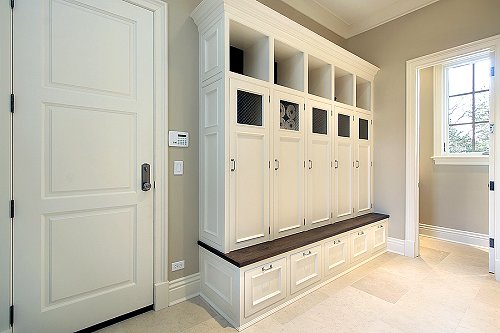
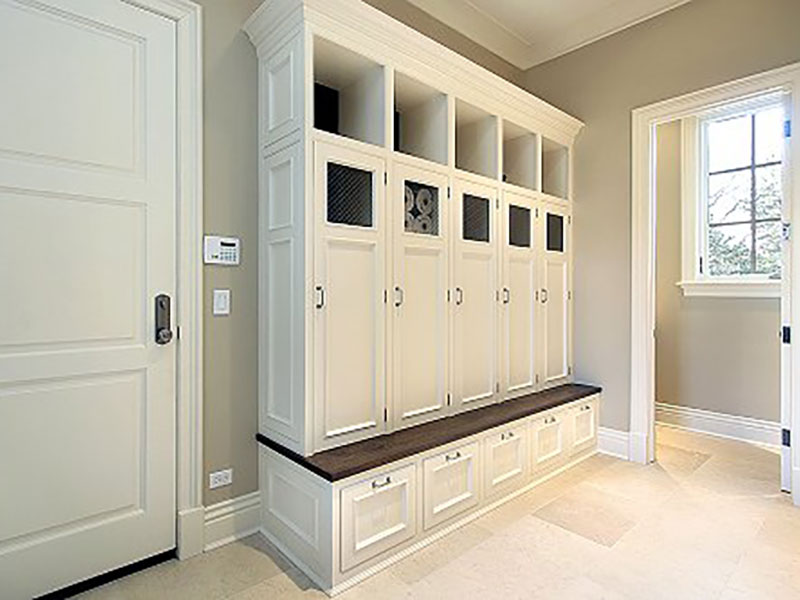
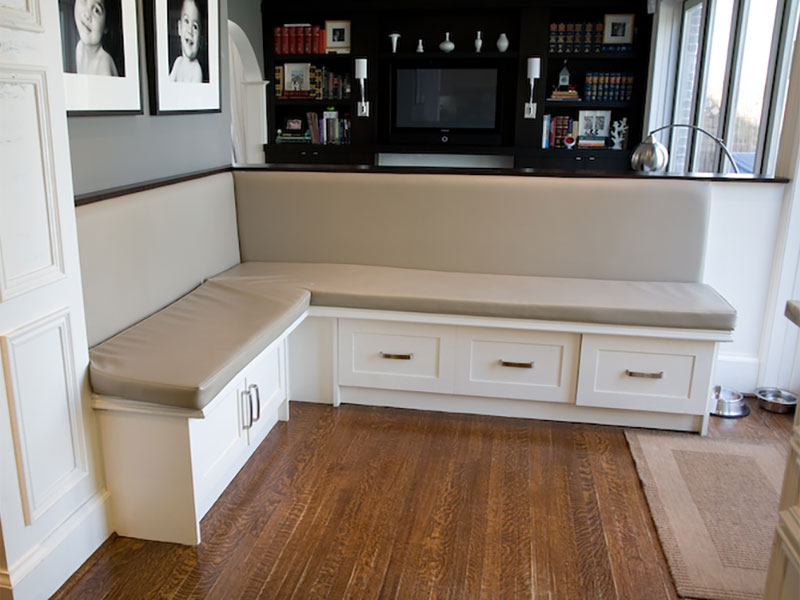
A mudroom shouldn’t look like a locker room bolted onto your home. Custom cabinetry lets the mudroom match your existing trim, colours, and door styles so it reads as an integral part of the house, closed doors where you want tidiness, open cubbies where the family needs grab-and-go speed. That finish matters beyond looks: an entry that functions well and looks built-in is the kind of everyday-livability upgrade buyers notice, and it’s one of the storage projects homeowners tell us they wish they’d done years earlier.

Don’t Forget the Other Three Seasons
The same room that handles January handles April: rain boots and wet raincoats need the identical drip-and-dry zones that snow gear does, and summer fills the cubbies with ball gloves, sunscreen, and sandals. The seasonal swap becomes a ten-minute job, winter gear moves up into the closed cabinets, spring gear comes down to the hooks, instead of a basement archaeology project. Before we design anything, we ask you to list everything you plan to store through a full year; the honest version of that list is what determines the mix of hooks, cubbies, drawers, and doors.
Winter Mudroom Questions, Answered
Where can a mudroom go if my house doesn’t have one?
Wherever your family actually enters: a side-door landing, back hall, the wall just inside the garage entry, or a corner of the laundry room. A mudroom is built-in storage, not a room addition, in most Toronto semis and older homes we’re converting an existing three-to-six-foot stretch of wall, not building new space.
How do you keep road salt and slush from wrecking a mudroom?
Keep boots low and contained, trays or a wipeable lower zone that can take daily meltwater, and choose finishes that shrug off moisture rather than absorb it. The mudroom’s whole job is to be the one sacrificial, easy-to-clean space so salt never reaches the hardwood beyond it.
What’s the difference between a mudroom and a hall closet?
A closet hides things behind a door; a mudroom is an open working zone designed for wet, daily-rotation gear. Closed closets trap moisture on soaked coats and boots, while a mudroom’s hooks, cubbies, and airflow let gear dry overnight, then closed uppers still hide what you don’t want seen.
How should wet mitts, hats, and scarves be stored so they dry?
One open basket or cubby per family member, positioned where air circulates, never sealed drawers while gear is damp. The per-person rule matters more than the container: it ends the communal mitten pile, and any dry morning starts with everyone knowing exactly which basket is theirs.
Is a mudroom worth it outside of winter?
Yes, spring rain gear needs the same drip zones snow gear does, and summer fills the same cubbies with sports equipment and sandals. Families use the mudroom twelve months a year; winter is just when its absence hurts the most.
Ready to get the boots, backpacks, and winter coats off your floors before the snow flies? Call Space Age Closets & Custom Cabinetry at (647) 394-7557 for an in-home mudroom consultation anywhere in Toronto and the GTA.